This page presents the overall approach of the project. From context to raw material, from research to production, from materials to the end of life of the objects designed by the studio. This page presents the overall approach of the project. From context to raw material, from research to production, from materials to the end of life of the objects designed by the studio.
Context
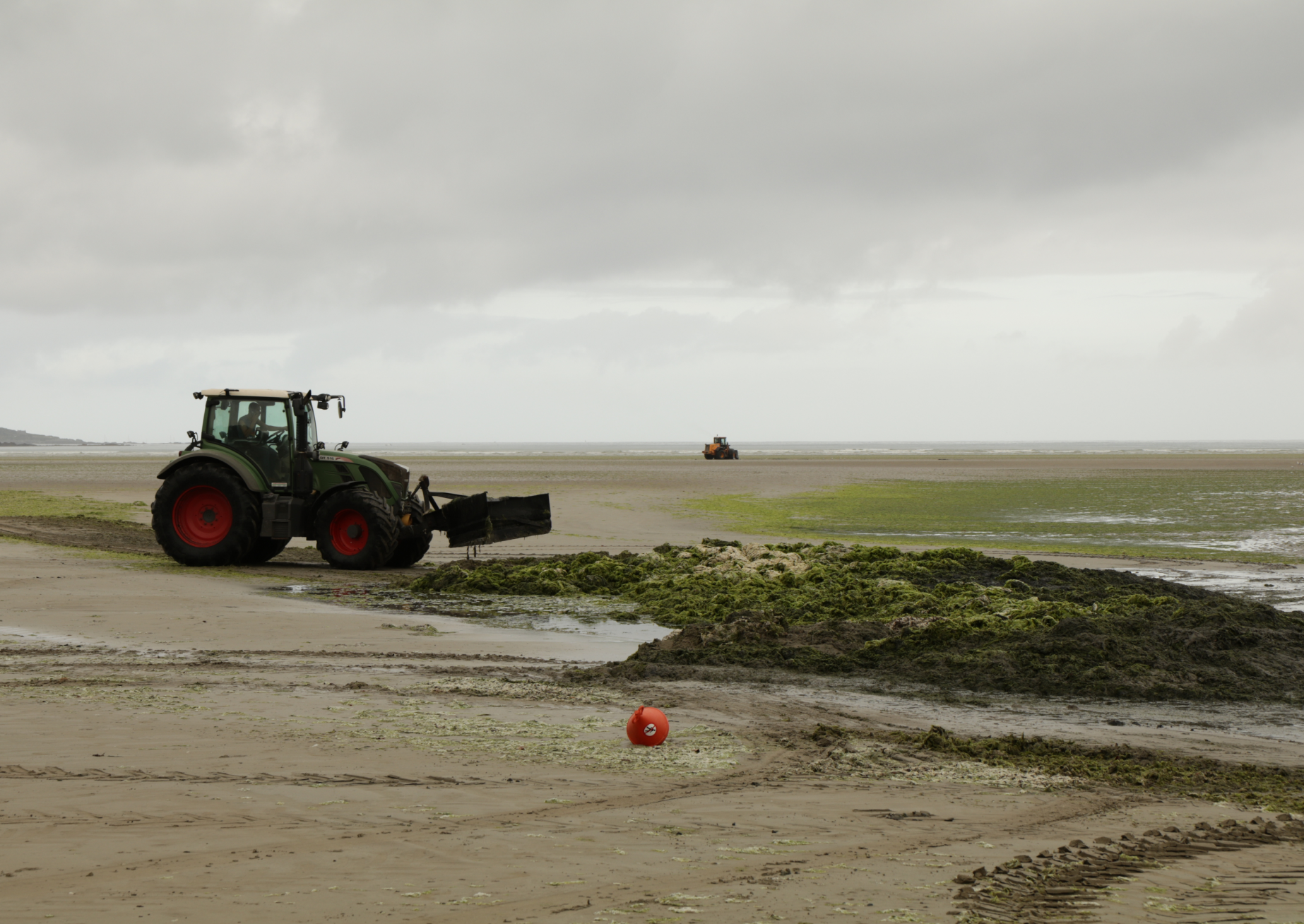
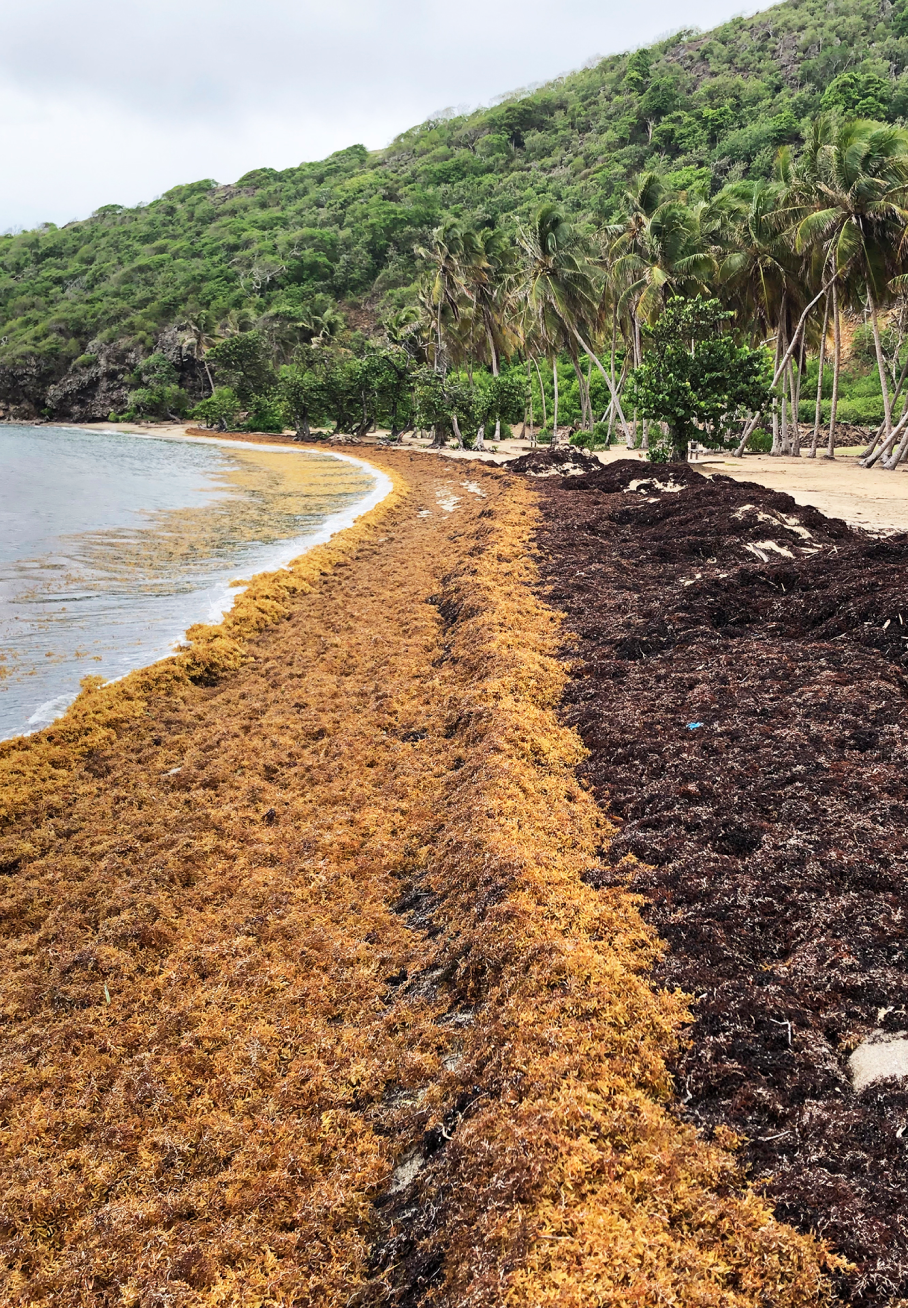
Every year, nearly 40,000 tonnes of green seaweed wash up on Brittany's beaches. These massive strandings, mainly caused by intensive livestock farming, water eutrophication and climate change, have disastrous environmental, economic and health consequences. Action plans and political measures follow one after another, but the phenomenon is relentlessly accelerating and can now be observed well beyond the Breton coastline. The primary goal of the Alga project is to turn this local waste into a positive production and to see it as an abundant resource, in a context of ecological emergency and increasingly scarce fossil raw materials. Launched in 2016, the project has evolved considerably since then. By surrounding himself with specialists and experts in every field he has encountered, designer Samuel Tomatis has succeeded in transforming this biomass into different types of materials with fascinating properties and aesthetics.
In collaboration with various organisations and municipalities, the studio now develops ways of adding value to seaweed in several regions (Brittany, Guadeloupe, Madagascar) and has become involved in many sectors of the seaweed industry, so as to also make use of the co-products of this fast-growing industry.
Research
Every year, nearly 40,000 tonnes of green seaweed wash up on Brittany's beaches. These massive strandings, mainly caused by intensive livestock farming, water eutrophication and climate change, have disastrous environmental, economic and health consequences. Action plans and political measures follow one after another, but the phenomenon is relentlessly accelerating and can now be observed well beyond the Breton coastline. The primary goal of the Alga project is to turn this local waste into a positive production and to see it as an abundant resource, in a context of ecological emergency and increasingly scarce fossil raw materials.
Every year, nearly 40,000 tonnes of green seaweed wash up on Brittany's beaches. These massive strandings, mainly caused by intensive livestock farming, water eutrophication and climate change, have disastrous environmental, economic and health consequences. Action plans and political measures follow one after another, but the phenomenon is relentlessly accelerating and can now be observed well beyond the Breton coastline. The primary goal of the Alga project is to turn this local waste into a positive production and to see it as an abundant resource, in a context of ecological emergency and increasingly scarce fossil raw materials. The primary goal of the Alga project is to turn this local waste into a positive production and to see it as an abundant resource, in a context of ecological emergency and increasingly scarce fossil raw materials.
Test
Every year, nearly 40,000 tonnes of green seaweed wash up on Brittany's beaches. These massive strandings, mainly caused by intensive livestock farming, water eutrophication and climate change, have disastrous environmental, economic and health consequences. Action plans and political measures follow one after another, but the phenomenon is relentlessly accelerating and can now be observed well beyond the Breton coastline. The primary goal of the Alga project is to turn this local waste into a positive production and to see it as an abundant resource, in a context of ecological emergency and increasingly scarce fossil raw materials. Launched in 2016, the project has evolved considerably since then. By surrounding himself with specialists and experts in every field he has encountered, designer Samuel Tomatis has succeeded in transforming this biomass into different types of materials with fascinating properties and aesthetics.
Raw material
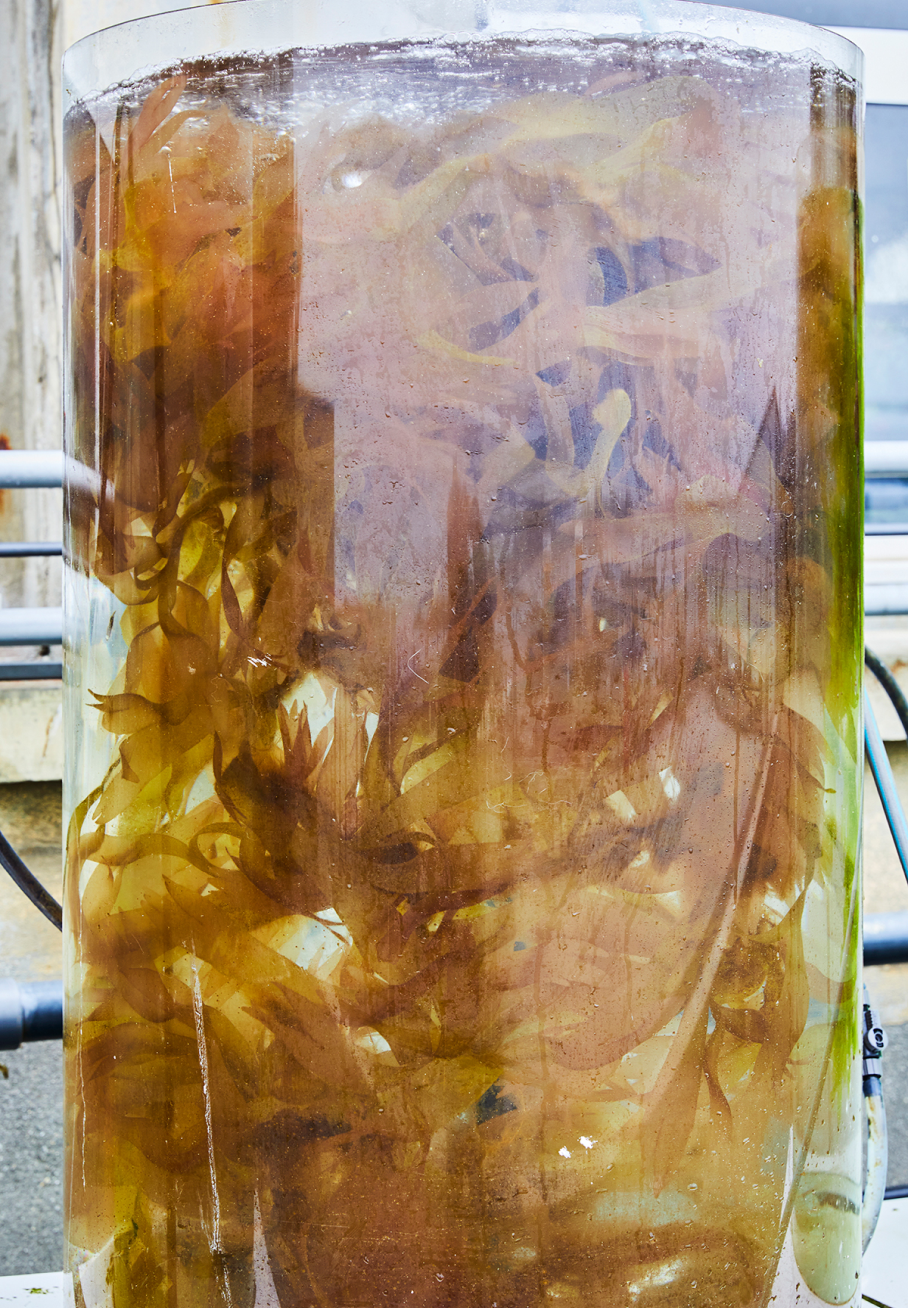
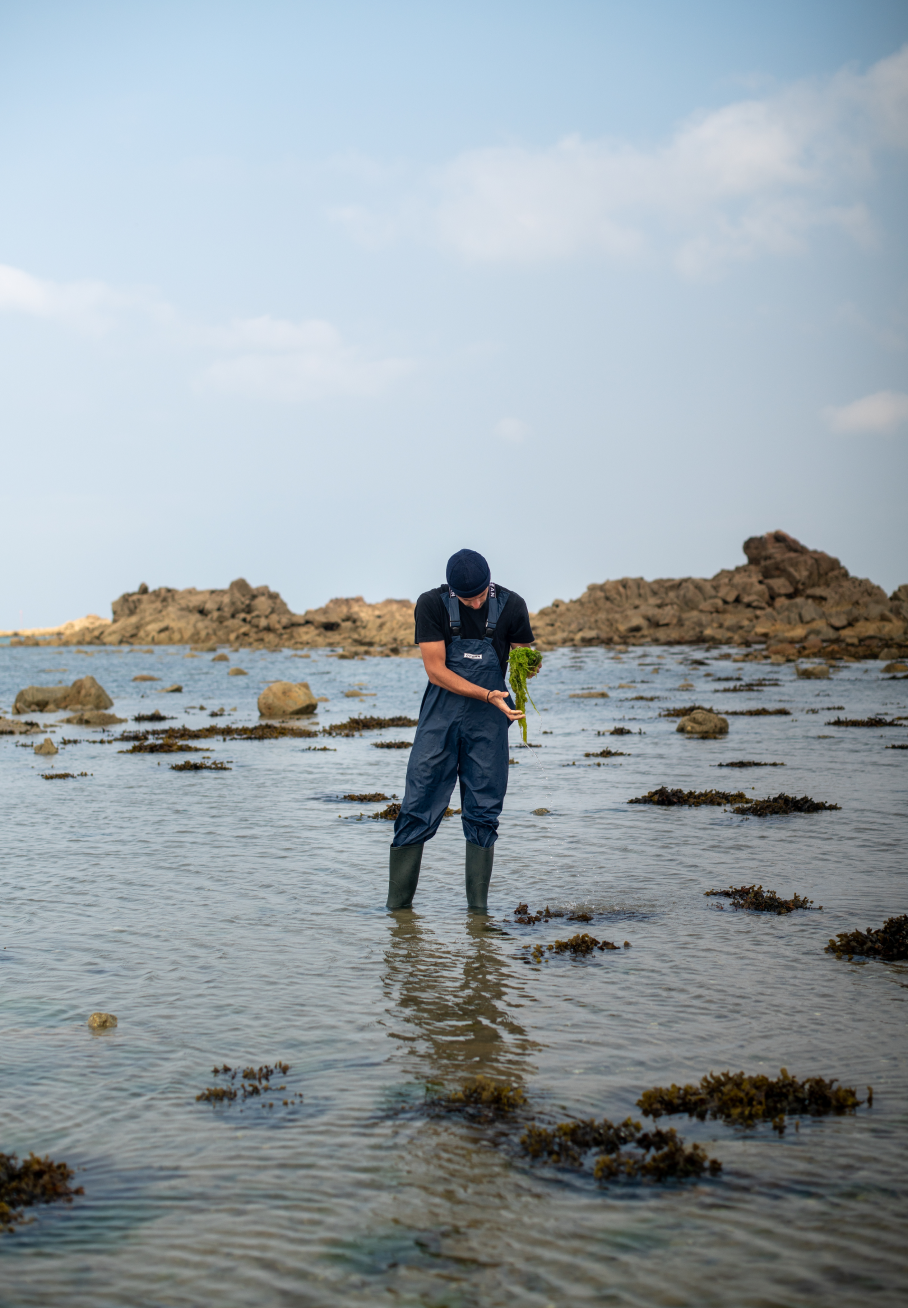
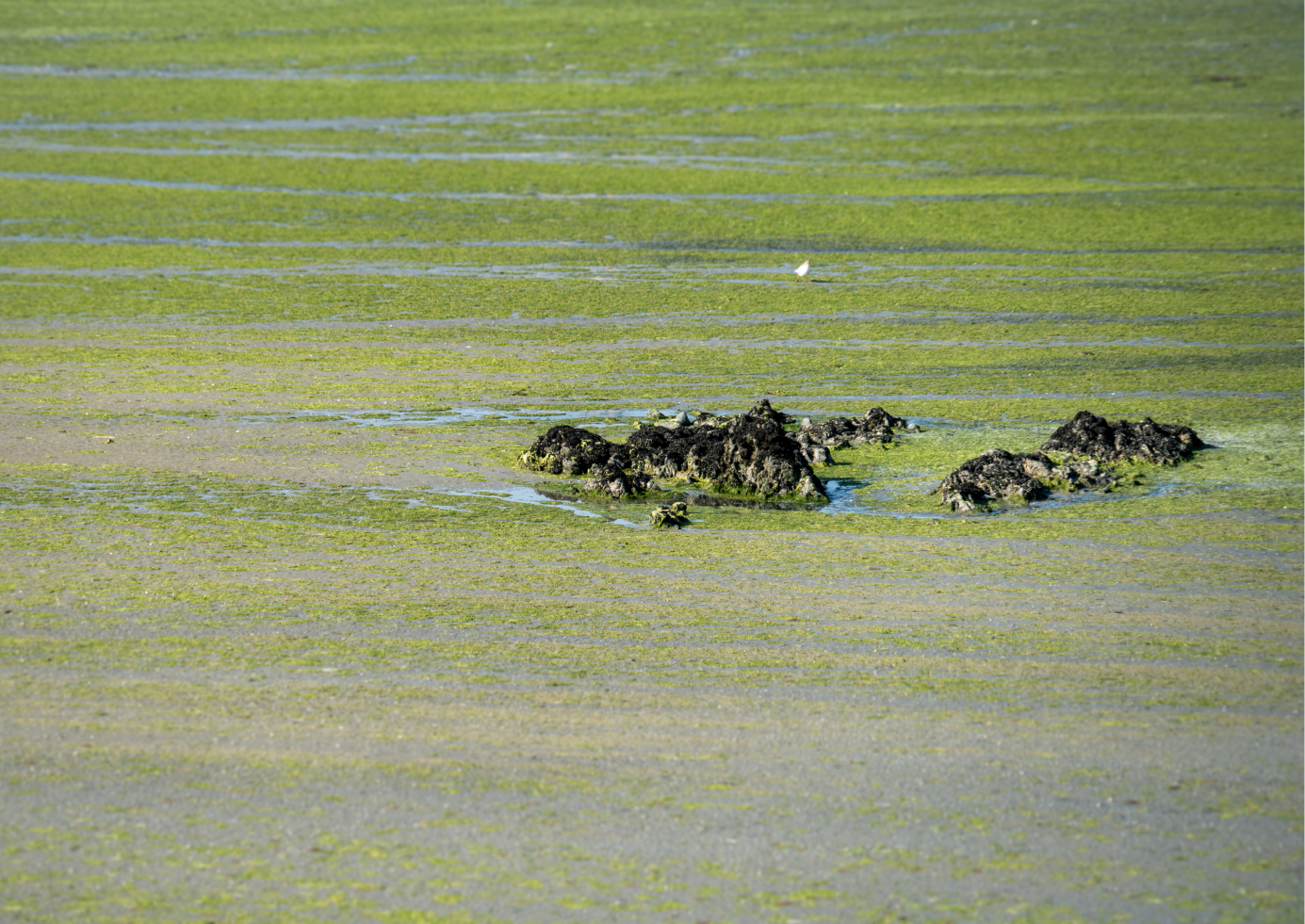
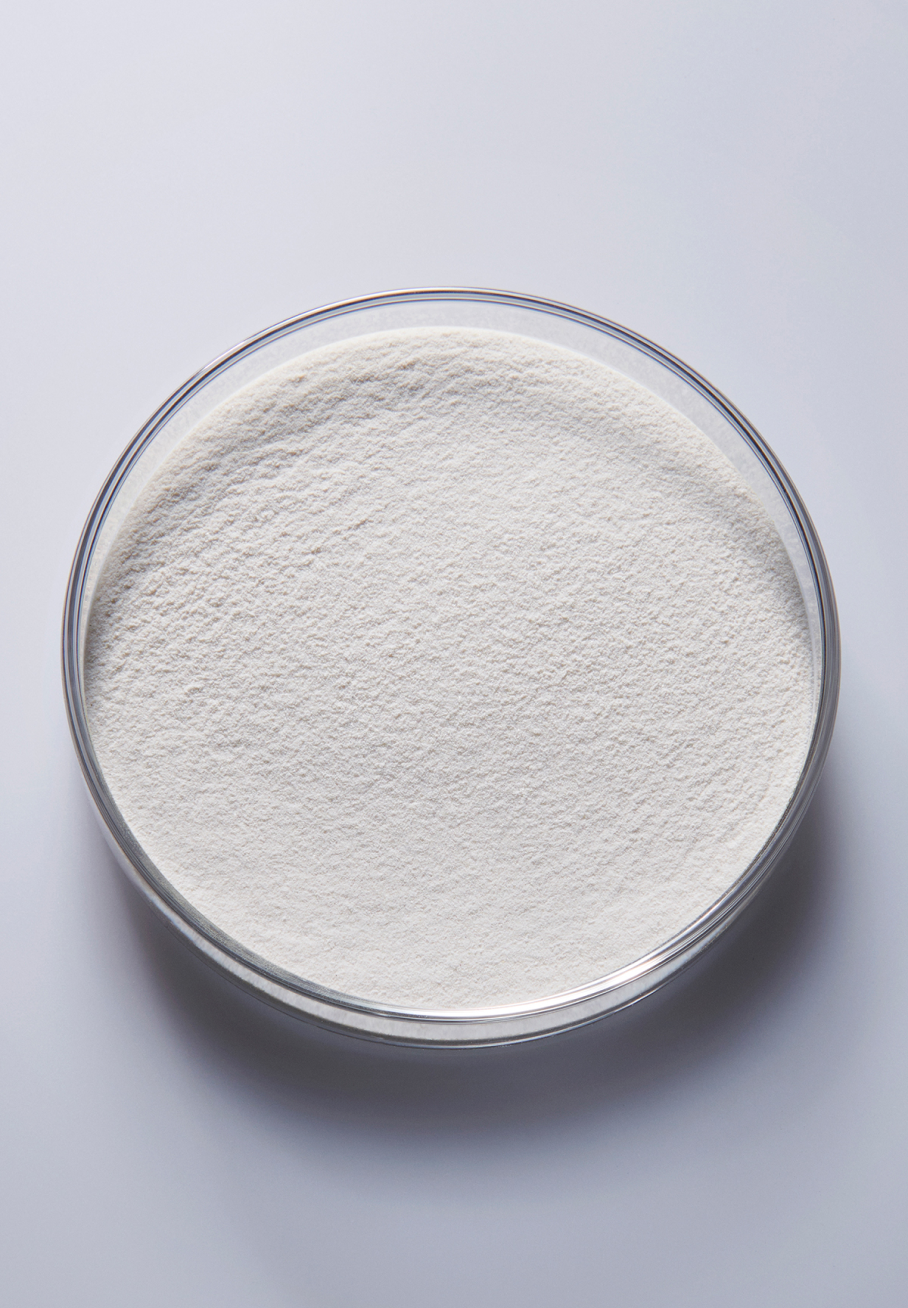
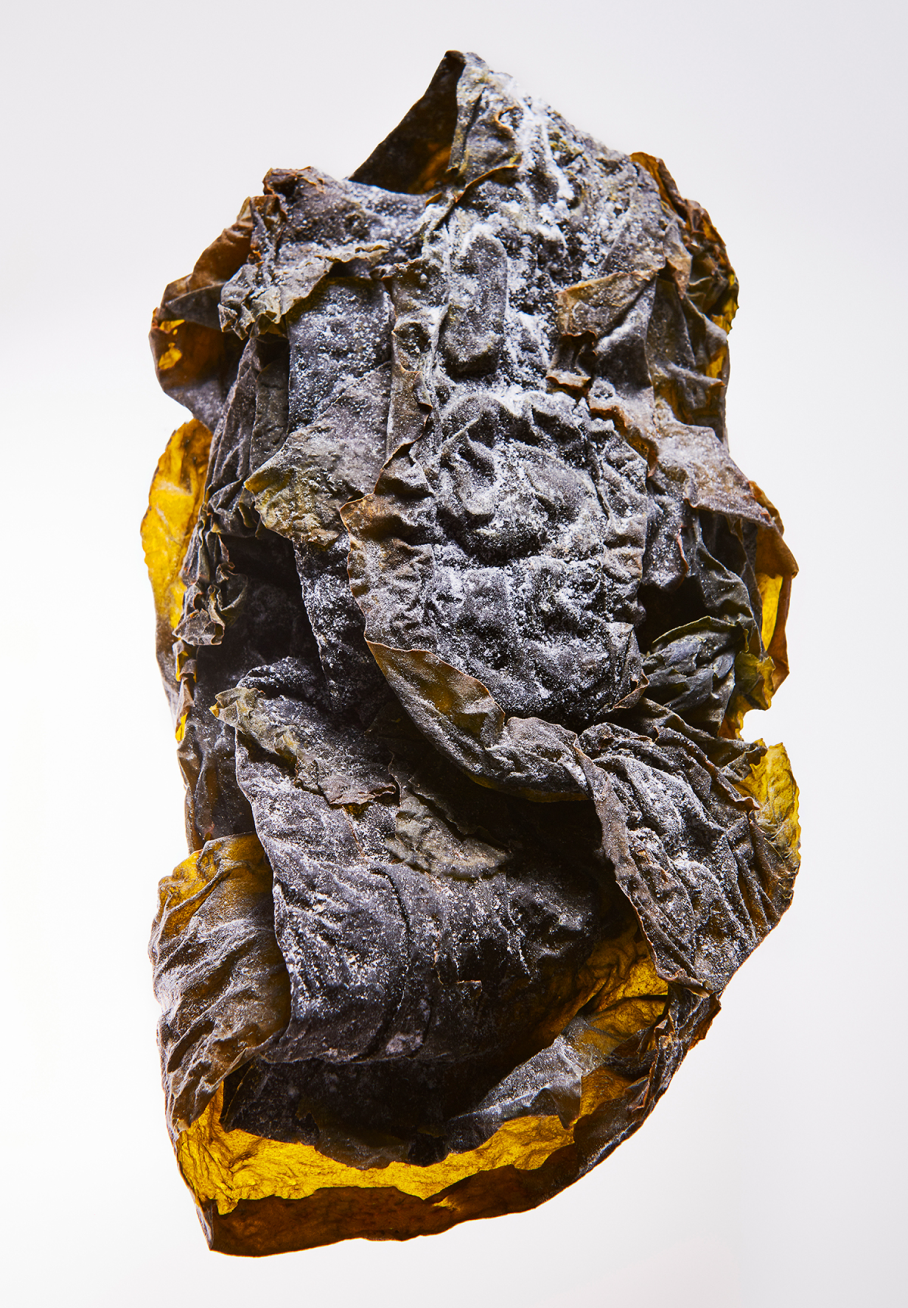
The first single-celled living organisms to appear on Earth, algae have incredible properties. Today they are used in three industrial sectors – cosmetics, health and food – notably for their polysaccharides, but their applications in the field of biomaterials are still marginal.
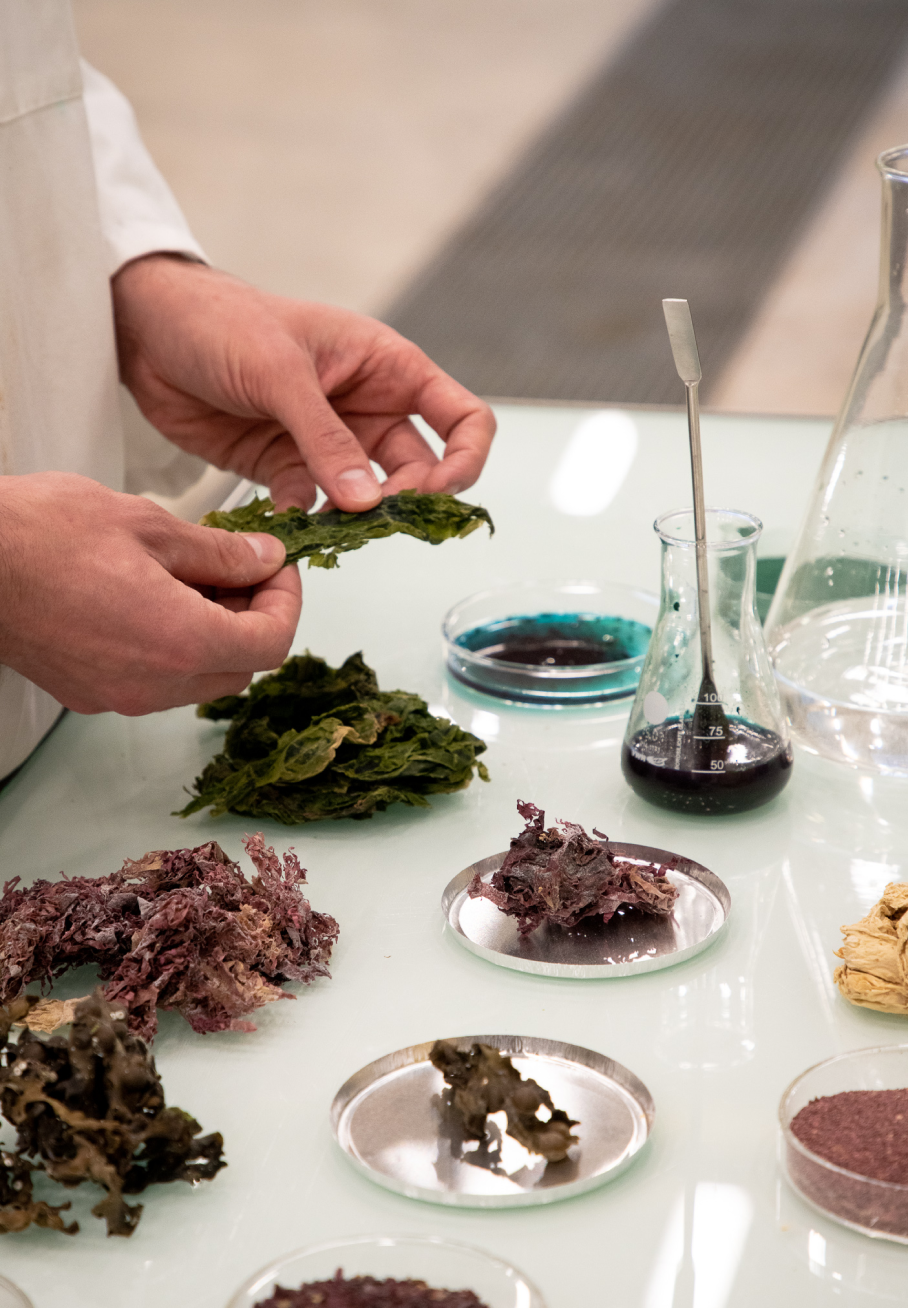
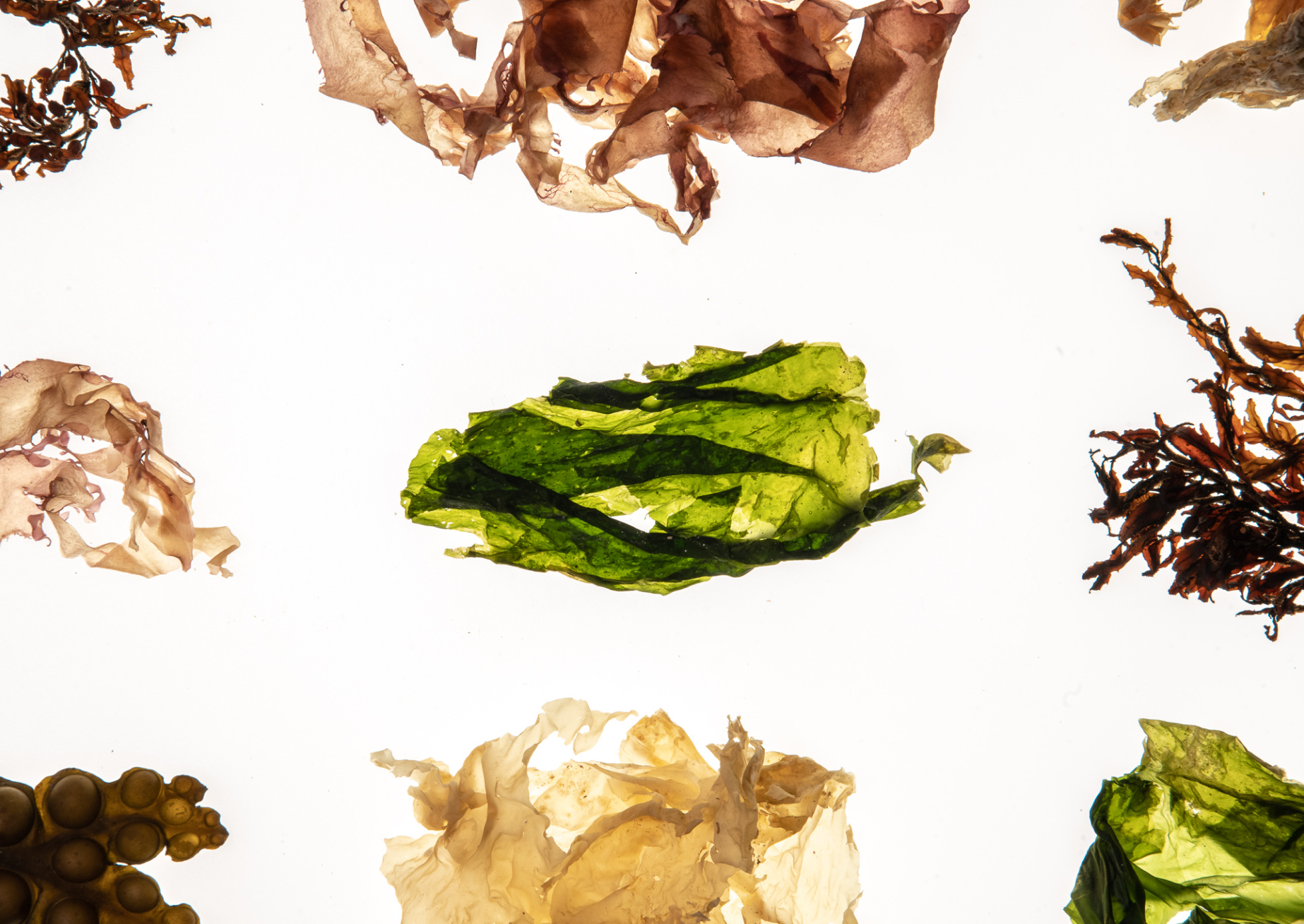
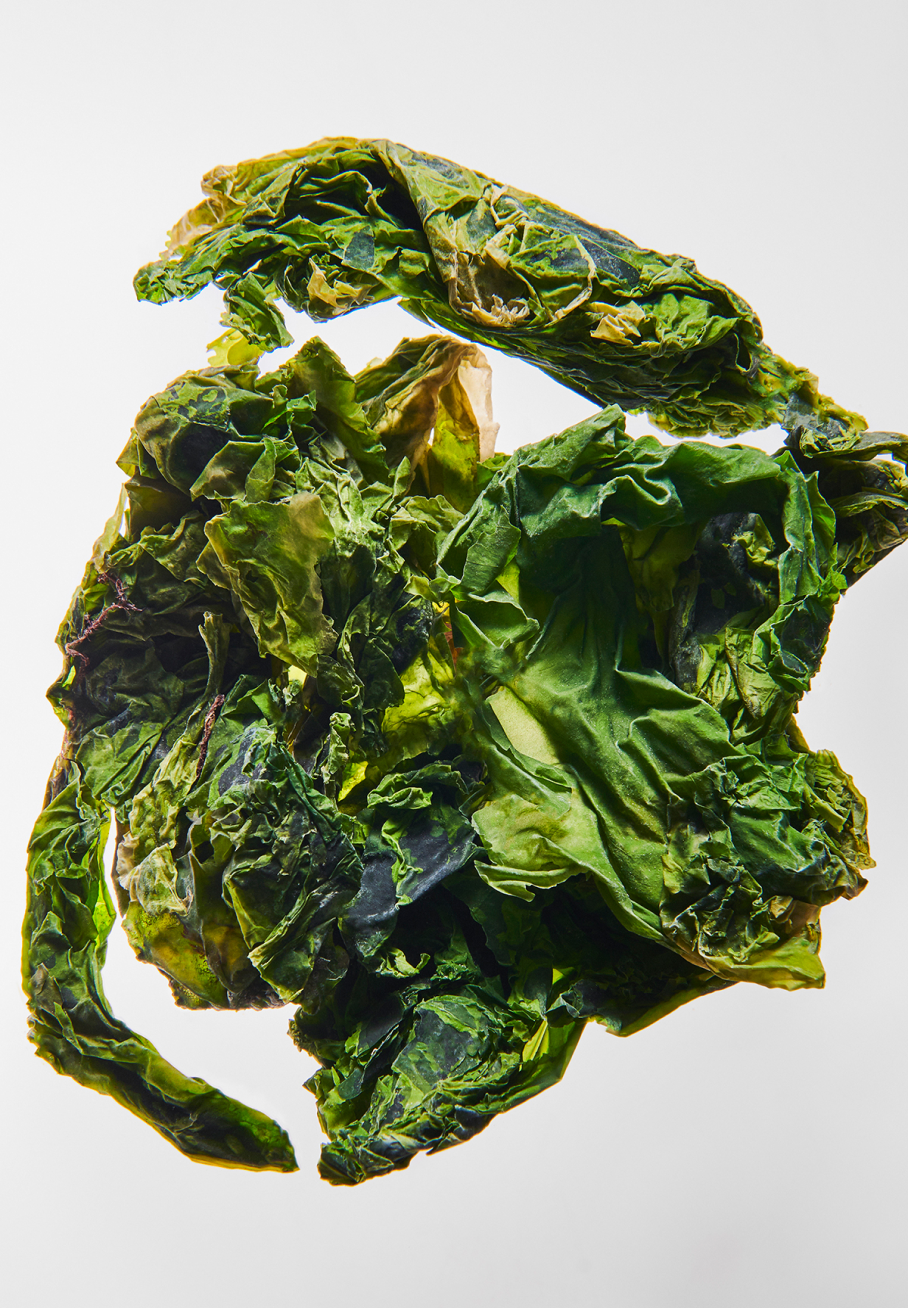
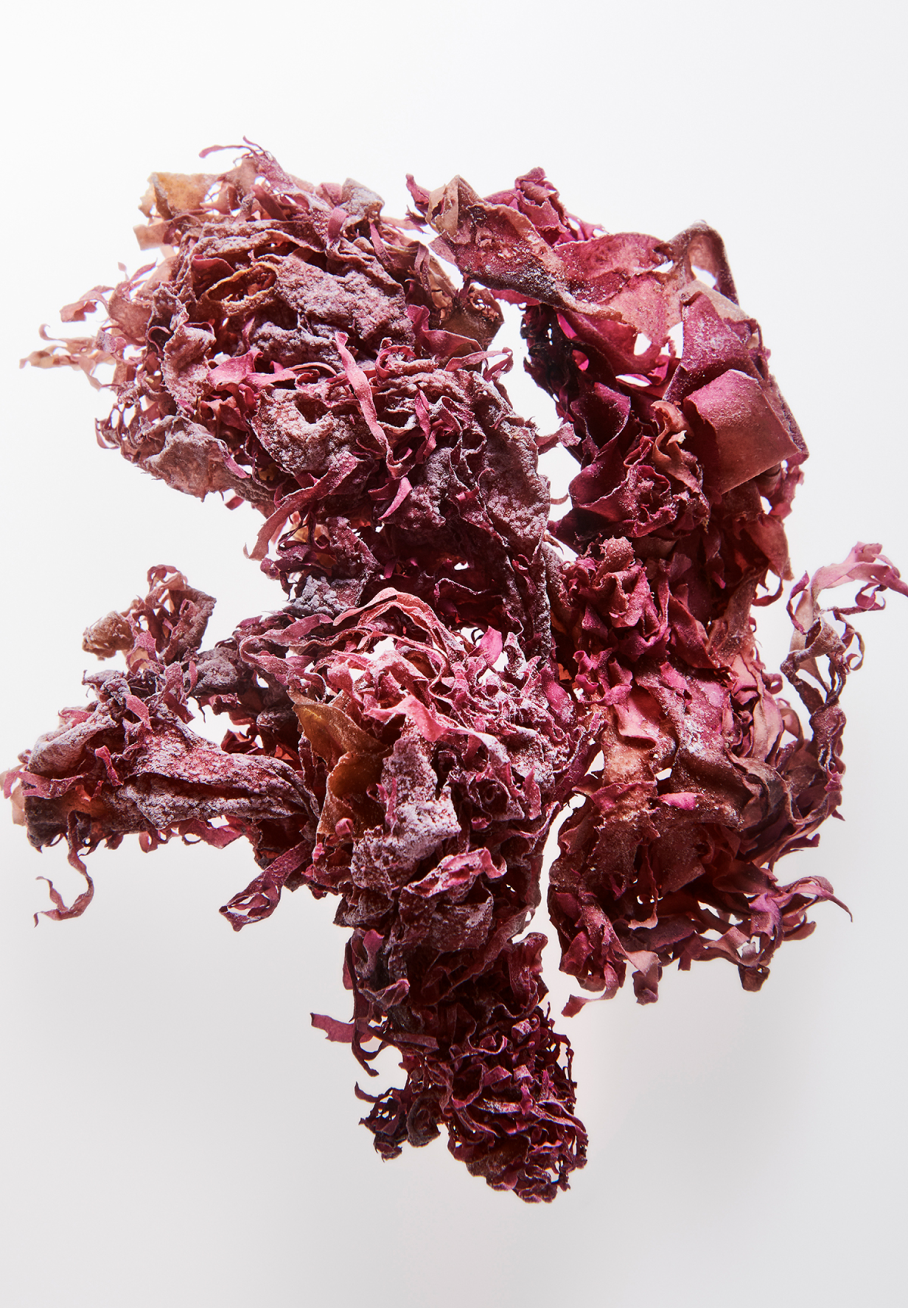
Algae are extremely diverse, a sign of their very long genetic history. Within the plant world, they do not form a homogeneous group, but are spread across several evolutionary lineages that are completely independent of one another. Marine algae fall into three main families: brown, red and green seaweeds.
Although a precise figure is hard to obtain, scientists count more than 9,000 species of macroalgae, 1,500 of which can be found in European seas. Brittany is home to the largest seaweed fields in Europe and the tenth largest in the world. This great heterogeneity explains the biochemical richness and diversity behind their use. We work with CNRS research centres, marine biologists and seaweed harvesters to identify and understand as fully as possible the composition of this complex raw material before turning it into a material.
Research & development
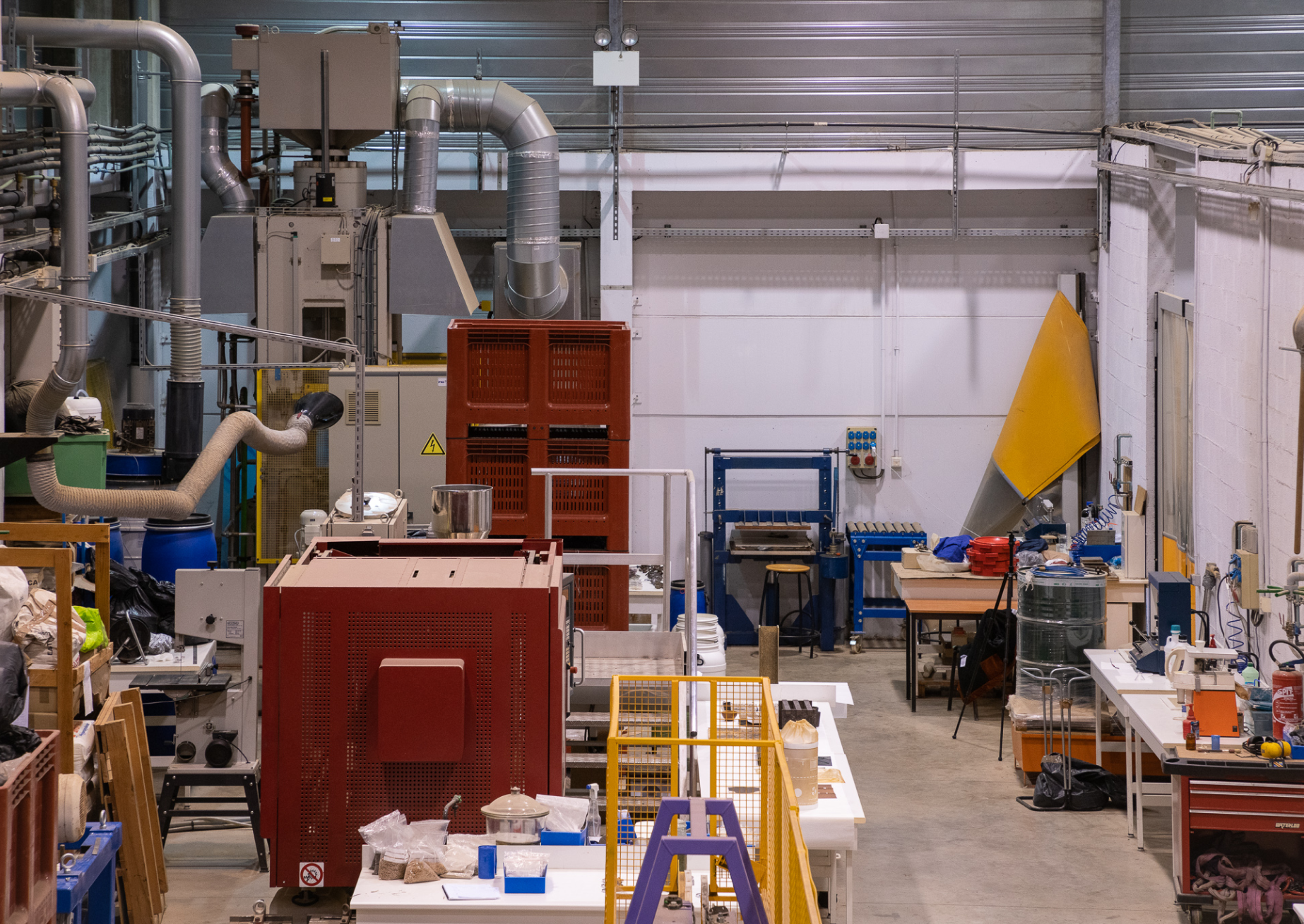
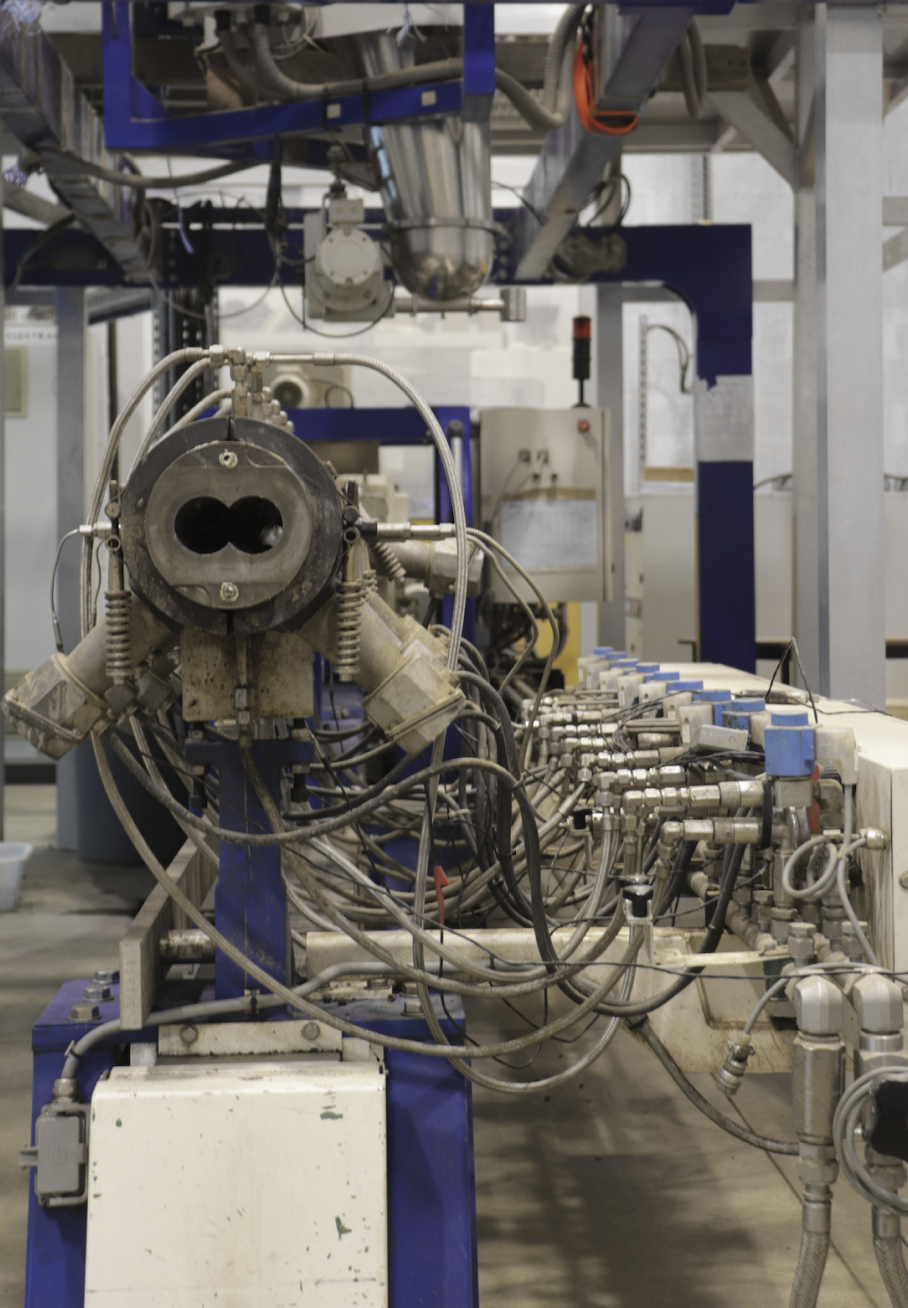
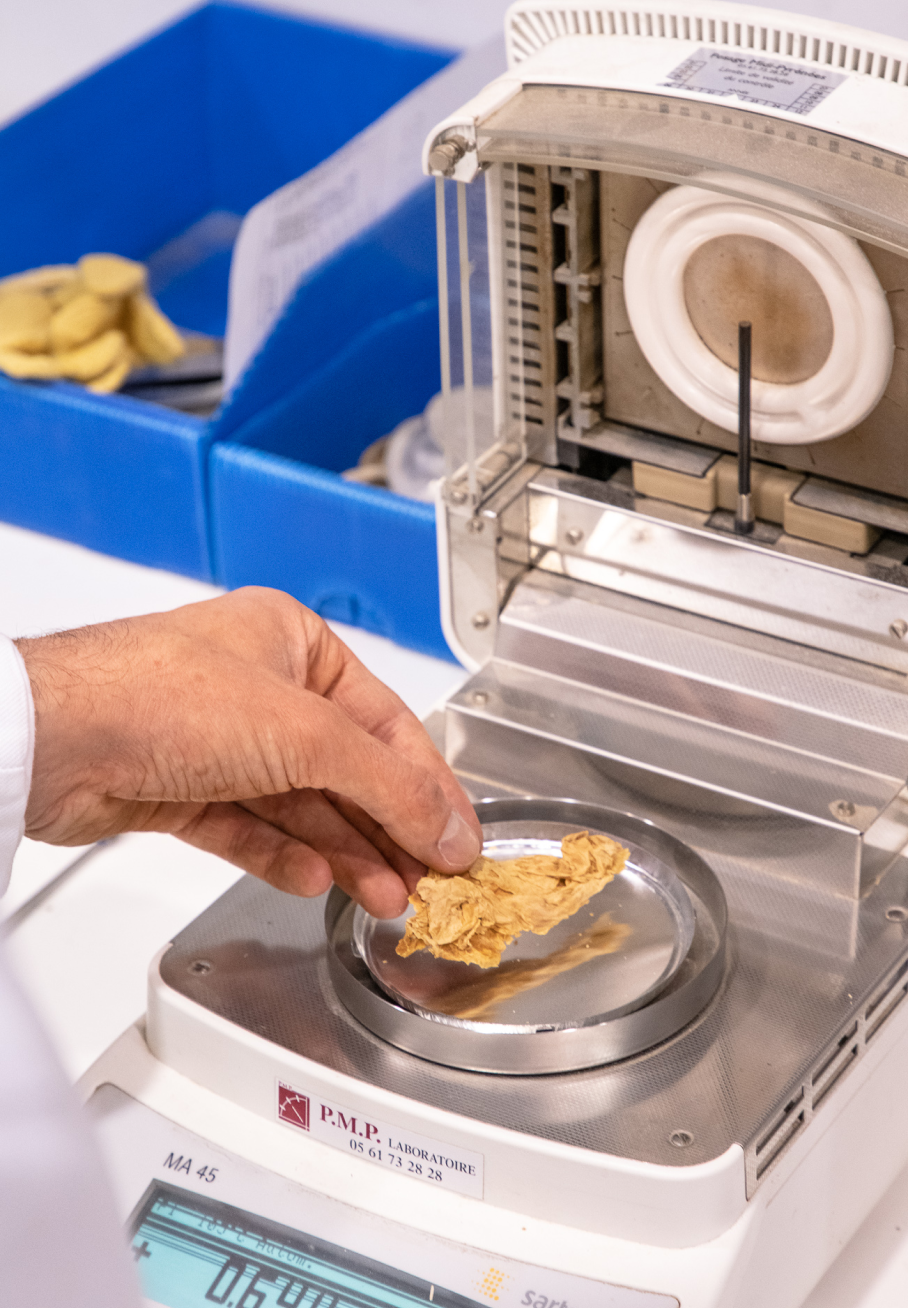
The studio follows an approach of radical ecology, at the frontier between science and design. In collaboration with INRAE laboratories, we work on industrial processes for manufacturing materials. Countless stages of identification, formulation and characterisation have enabled us to develop biodegradable materials, most of them 100% seaweed. All this while following a frugal philosophy in which the aim is to go from raw material to processed material as directly as possible, limiting and measuring our energy consumption.
The period of intensive research and development was highly complex, punctuated by difficulties in understanding the material itself, which varies from one species to another, from one particle size to another, from one batch to another. Moving from R&D to industrial scale is a real challenge, and one that is still under way as we write these lines. Working with new materials, organic ones at that, requires certain transformation processes to be adapted. As the resource is unpredictable, standardising it can be complex, which is why we are setting up a production model based on living systems, in tune with the raw material and neutral for our planet.
Theuuuu studio follows an approach of radical ecology, at the frontier between science and design. In collaboration with INRAE laboratories, we work on industrial processes for manufacturing materials. Countless stages of identification, formulation and characterisation have enabled us to develop biodegradable materials, most of them 100% seaweed. All this while following a frugal philosophy in which the aim is to go from raw material to processed material as directly as possible, limiting and measuring our energy consumption.
The period of intensive research and development was highly complex, punctuated by difficulties in understanding the material itself, which varies from one species to another, from one particle size to another, from one batch to another. Moving from R&D to industrial scale is a real challenge, and one that is still under way as we write these lines. Working with new materials, organic ones at that, requires certain transformation processes to be adapted. As the resource is unpredictable, standardising it can be complex, which is why we are setting up a production model based on living systems, in tune with the raw material and neutral for our planet.
Materials
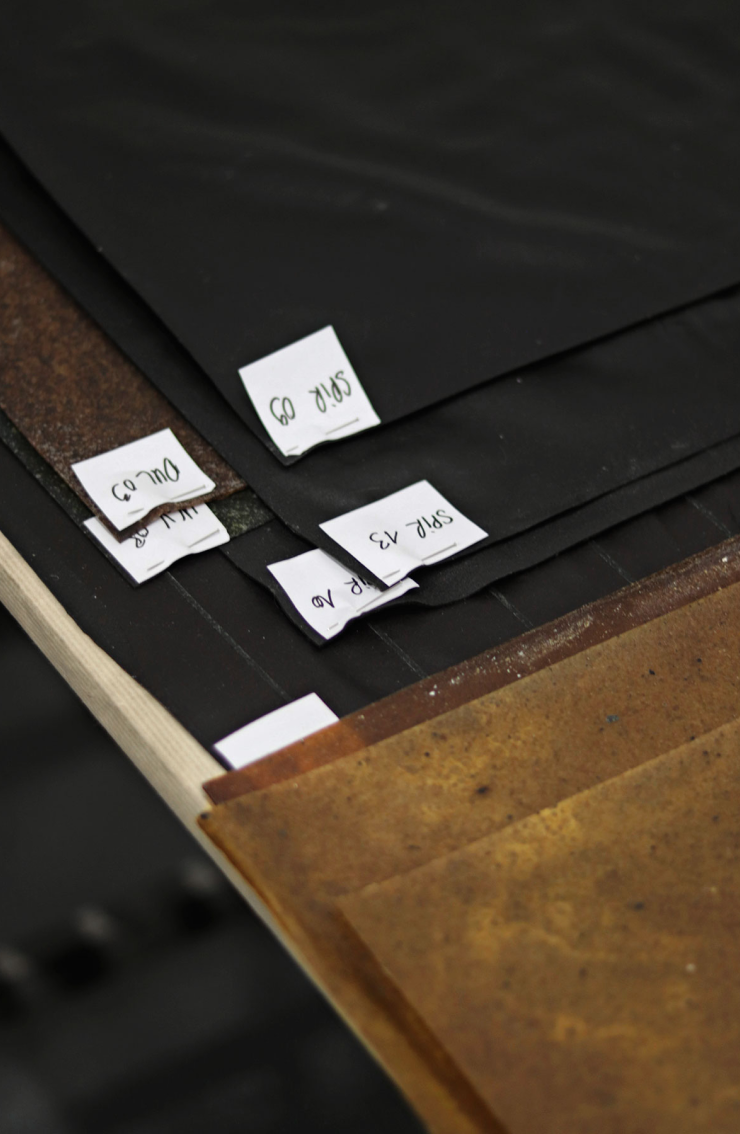
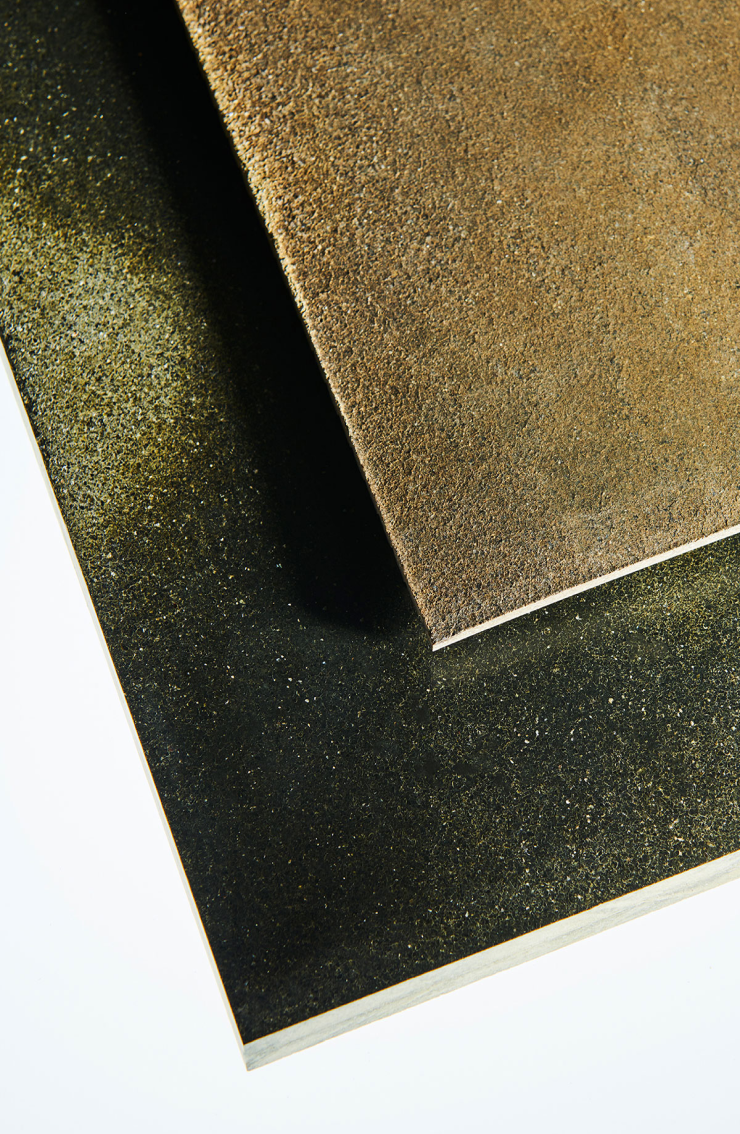
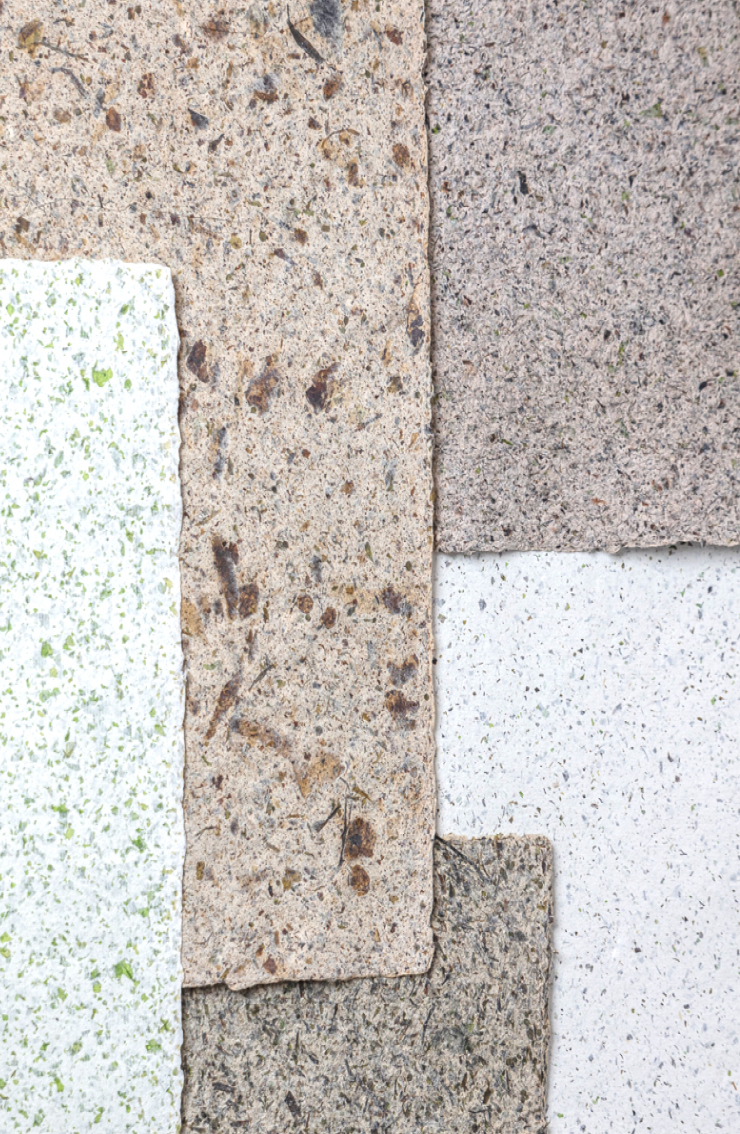
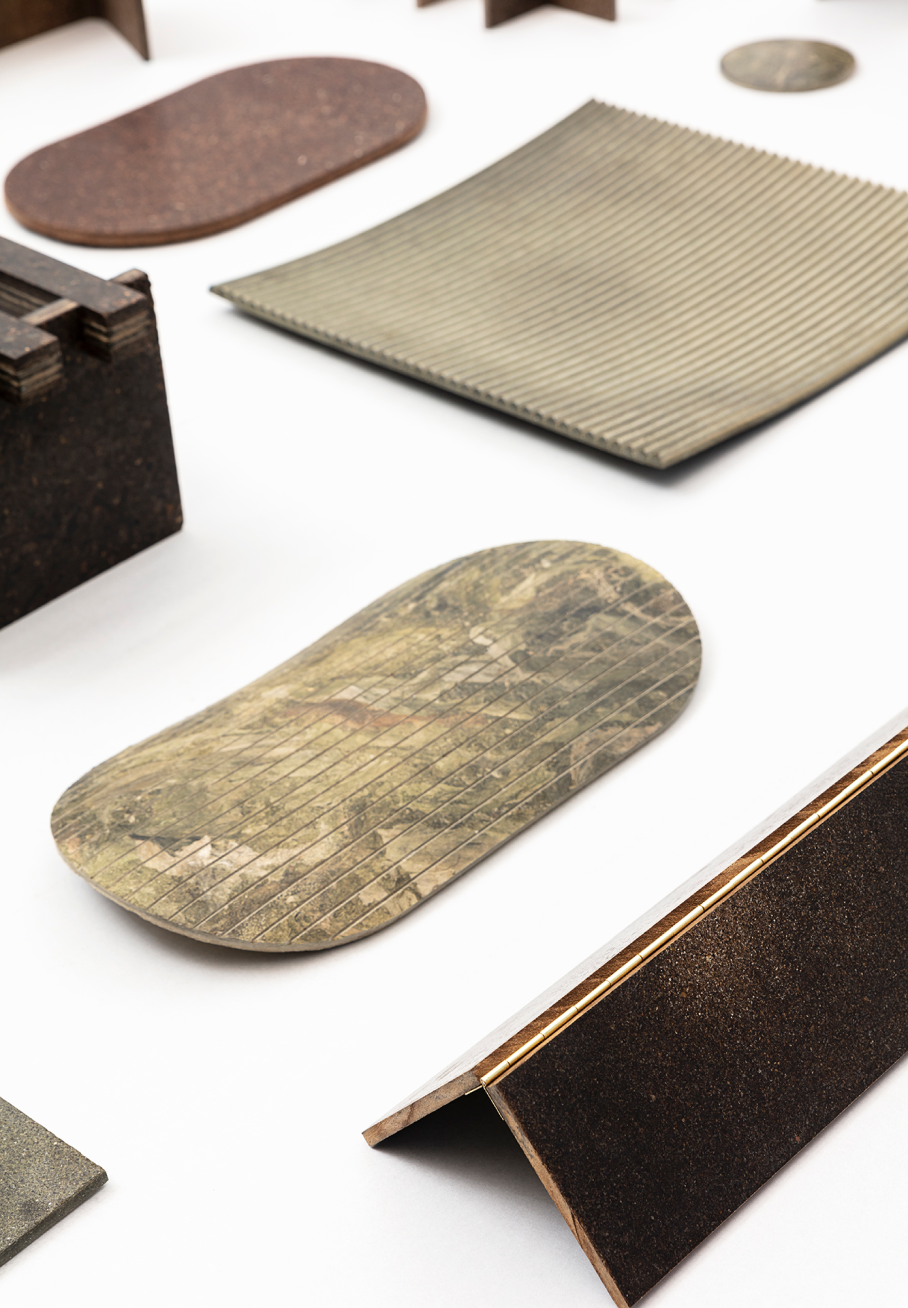
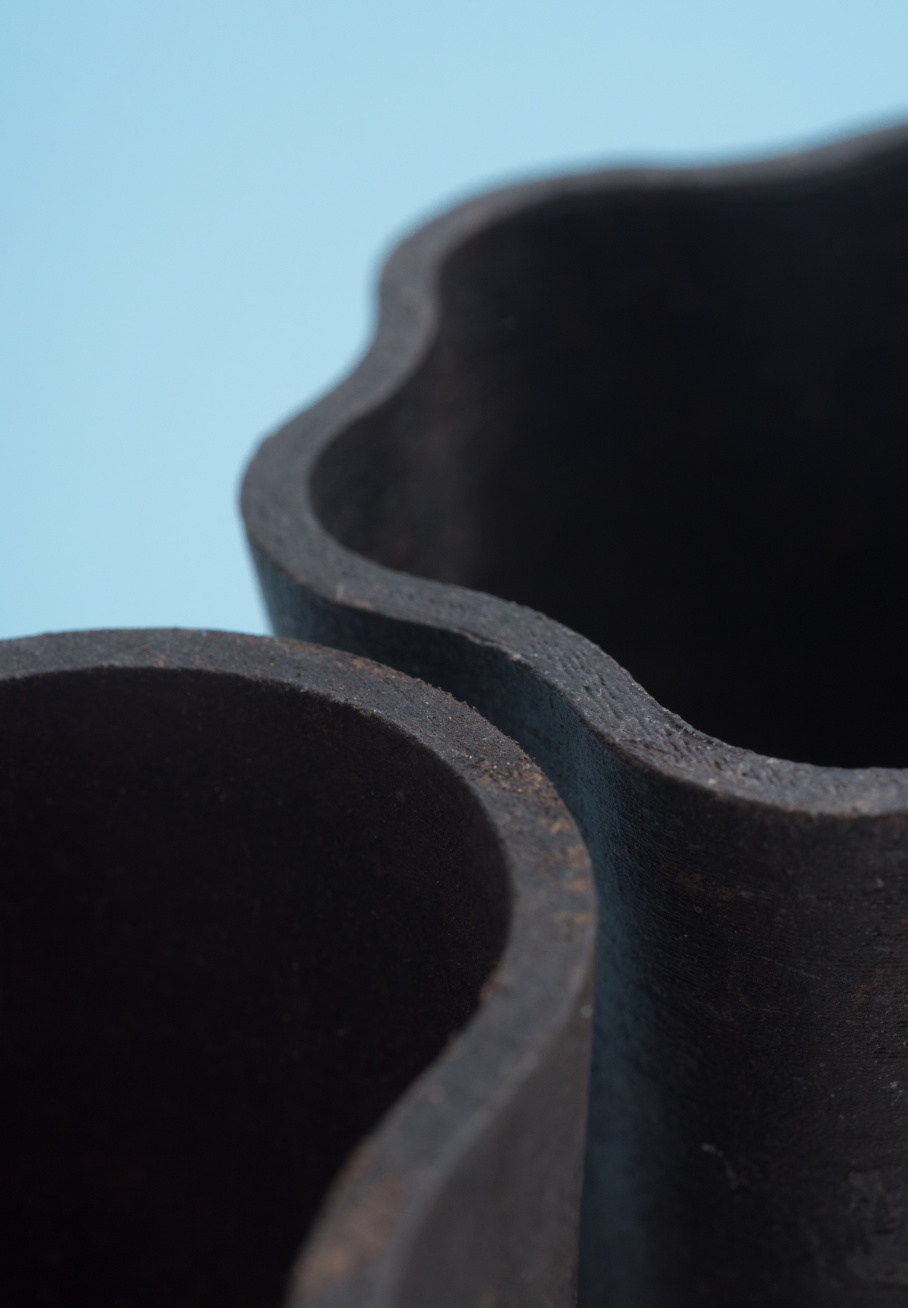
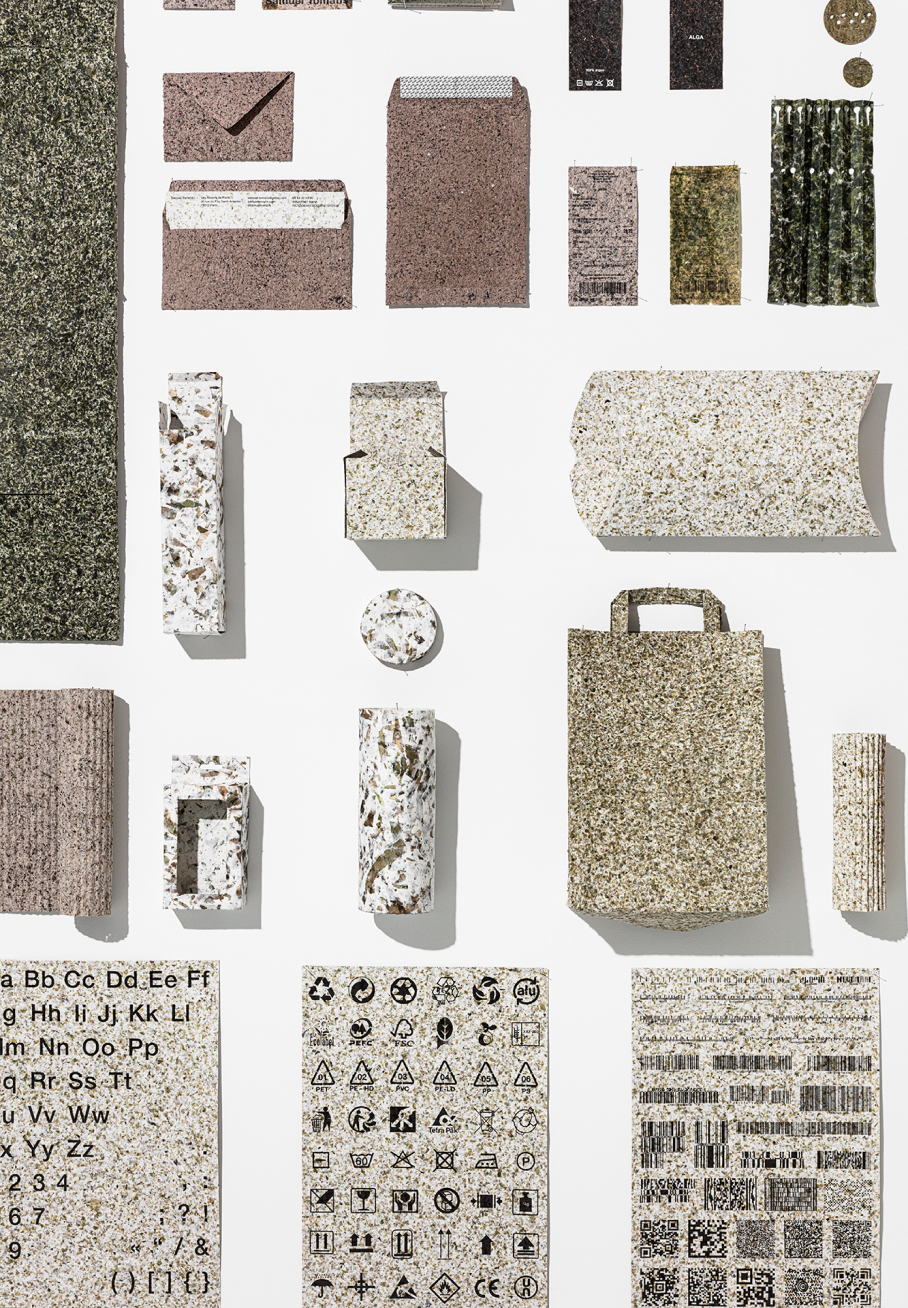
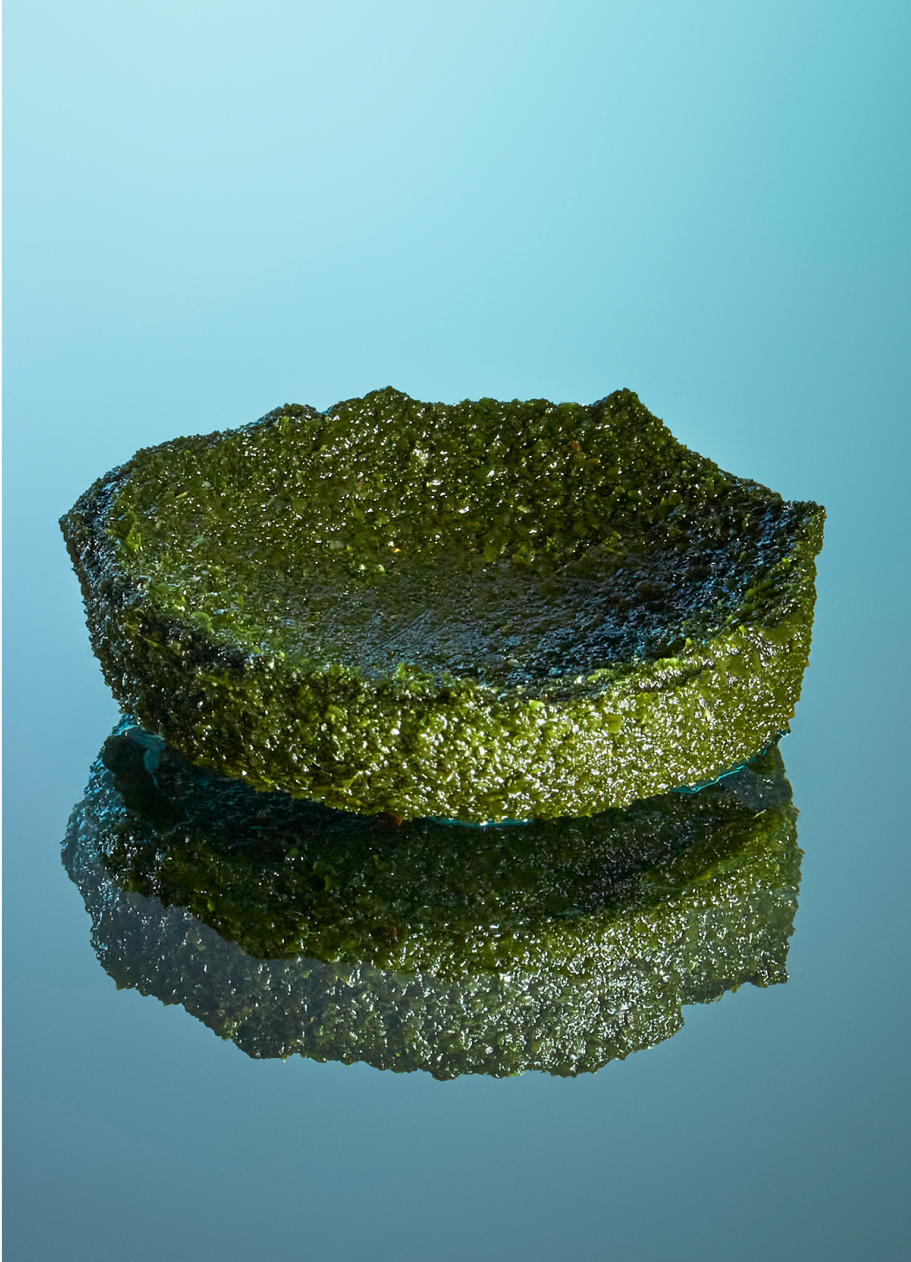
As well as being biodegradable, the different species of seaweed offer an almost infinite range of aesthetics. Sometimes, although entirely plant-based, they look strikingly mineral. People who have seen or touched our materials often compare them to existing materials such as stone, marble, Bakelite, leather or plastic. In total, Studio Samuel Tomatis has invented 6 new materials:
- Rigid materials: seaweed panels that can replace most particleboards
- Flexible materials: seaweed sheets similar to plastic or leather
- Paper: sheets of paper that can be shaped for packaging applications
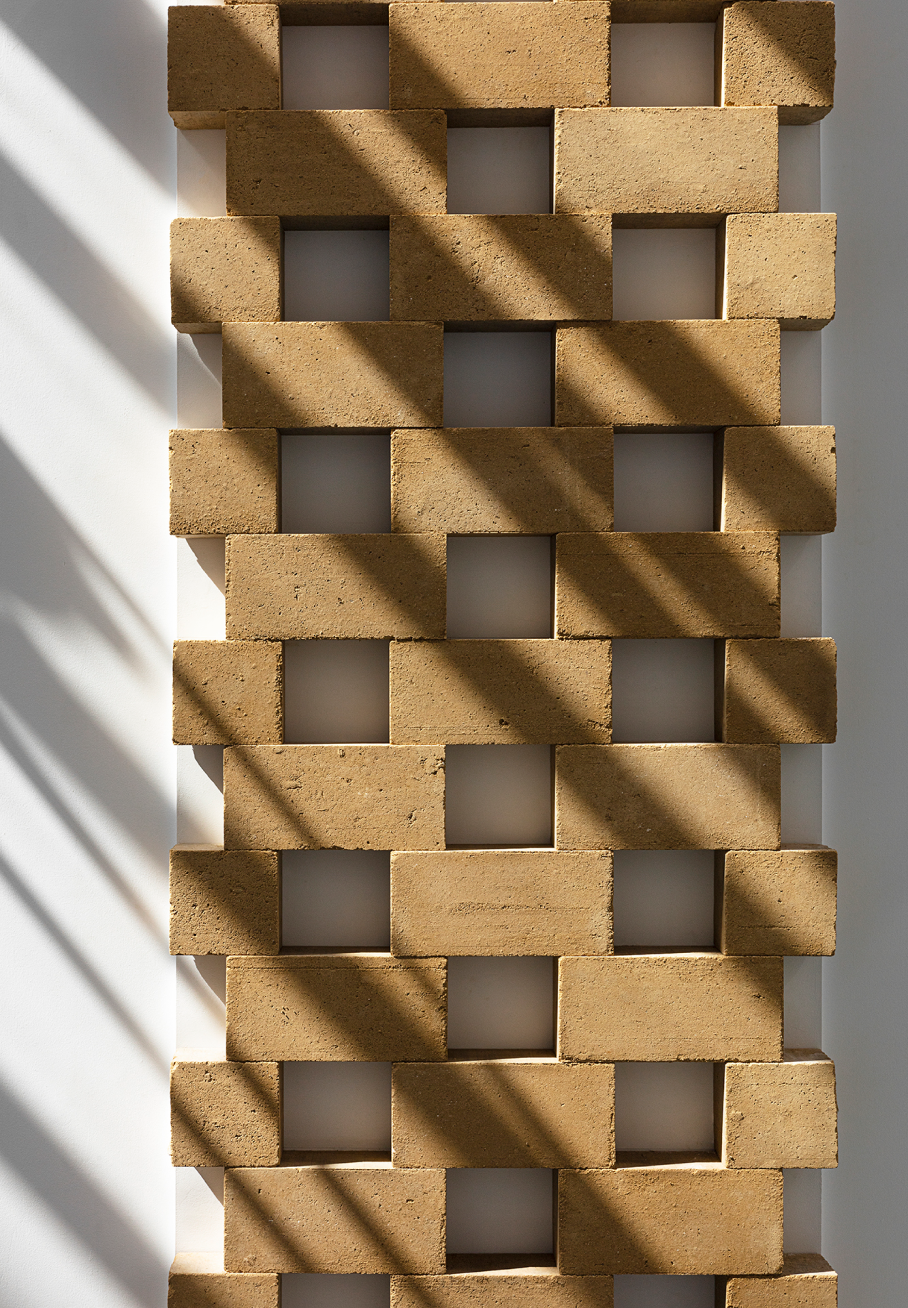
- Raw earth bricks in which lime is replaced by seaweed
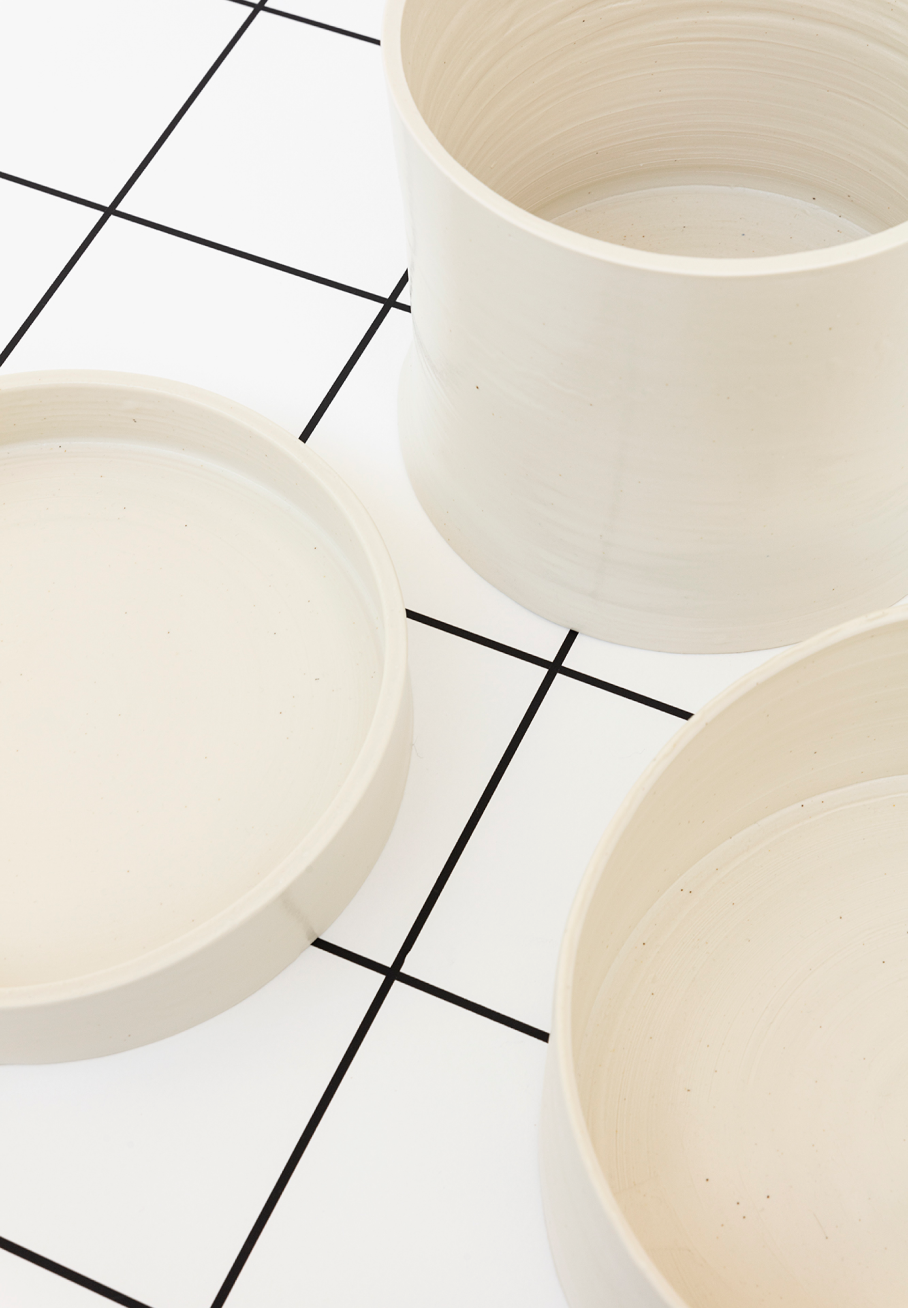
- Seaweed-based glaze
- Natural seaweed-based dye
These materials, all protected and owned by the studio, can be seen in various forms, aesthetics and applications in the projects presented on our website.
Today we are mainly working on the industrialisation of the flexible and rigid materials and, for the time being, only take on bespoke projects. The other materials can be ordered in reasonable quantities depending on demand. The studio's stated goal is to make these materials accessible to the general public in the future.
Applications
Once the materials have been developed, a technical validation phase is required. It is essential and makes it possible to look ahead to shaping them and imagining applications and everyday objects.
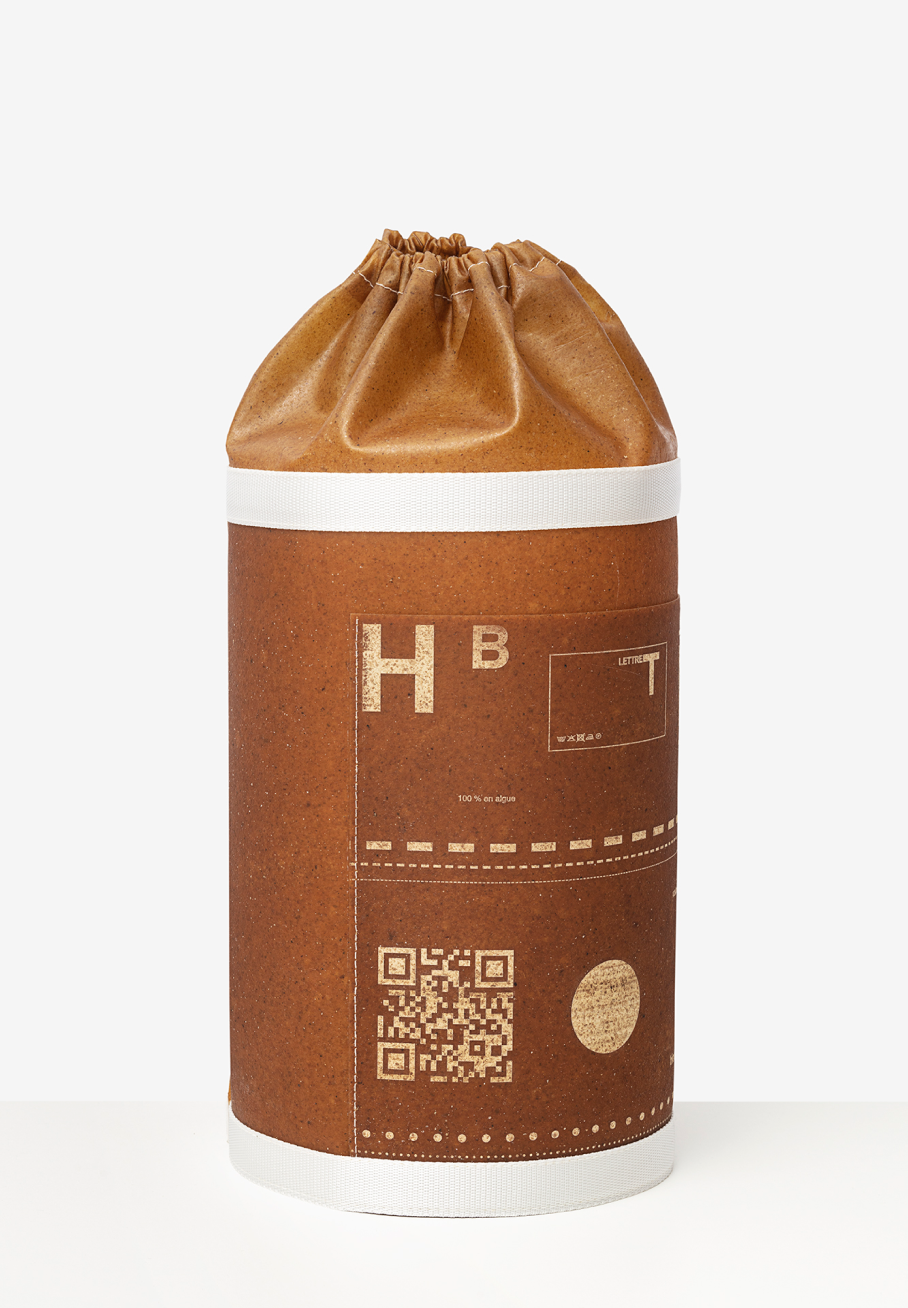
During his research, Samuel Tomatis wanted to experiment with everything that could be done with seaweed, without ever setting himself any limits. Interior fittings, furniture, construction, packaging, textiles, accessories, industrial packaging: so many fields in which seaweed offers real alternative solutions. So many applications through which Samuel has sought to respond to contemporary challenges and to the aberrations of certain sectors at a time of ecological emergency (tanning in the leather industry, formaldehyde in particleboard, the use of lime in raw earth bricks, the permacrisis of paper).
The applications designed from the materials mentioned above all crystallise, through the object and its industrial aesthetic, specific constraints linked to these new materials: texture, mechanical strength, surface finish, flexibility, tear resistance or biodegradability.
End of life
Following a cradle-to-cradle and circular economy approach, the Alga project and Studio Samuel Tomatis's entire approach highlight forward-looking scenarios that move away from mass production. They encourage users to embrace the ephemeral in the way they consume and point towards a paradigm shift in which solutions are emerging to reduce the impact of our Anthropocene waste. For the most part, these objects and materials change our relationship with materiality, and the notion of heritage takes on a whole new meaning: it is no longer passed down from human to human, but rather from human to nature.
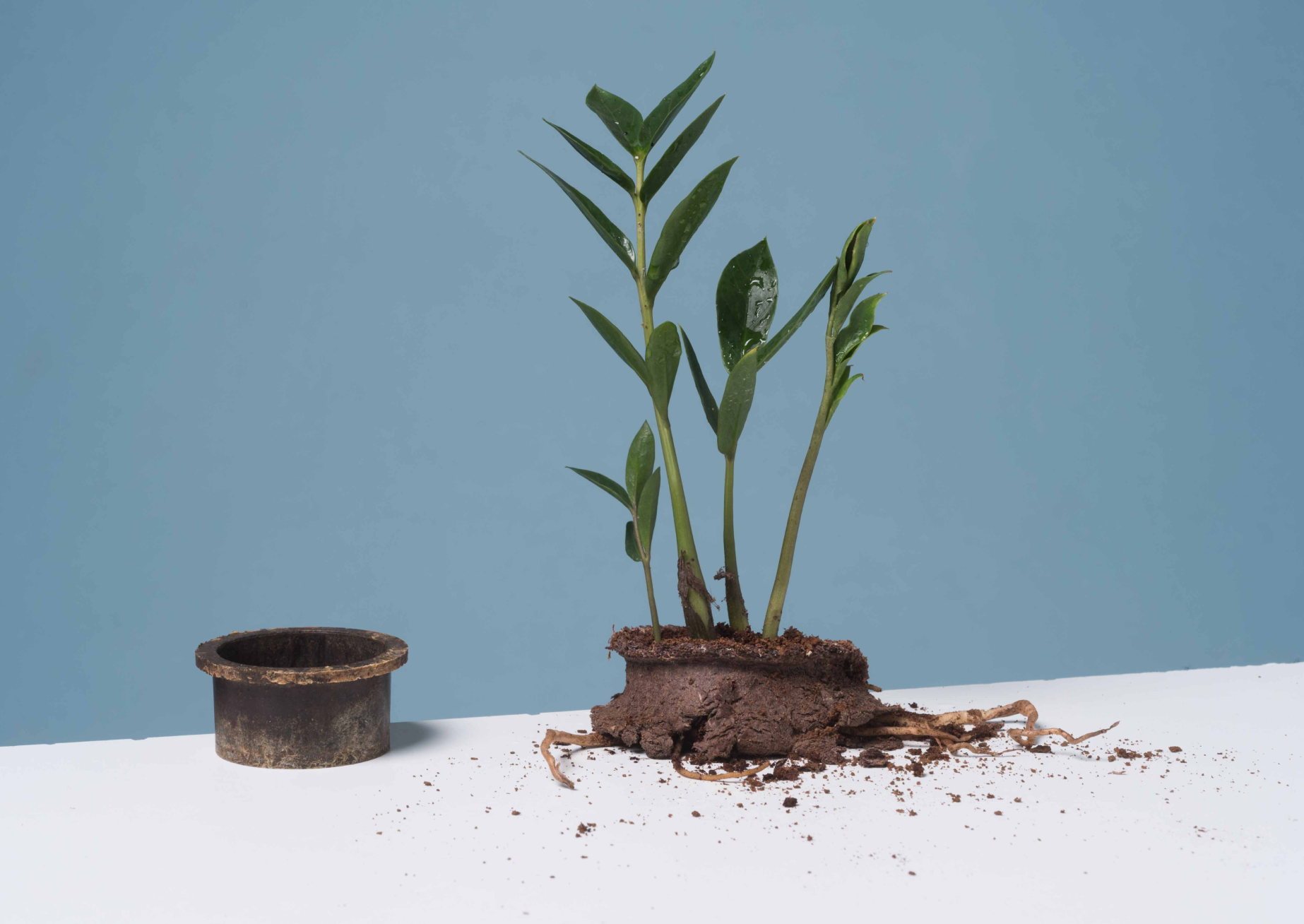
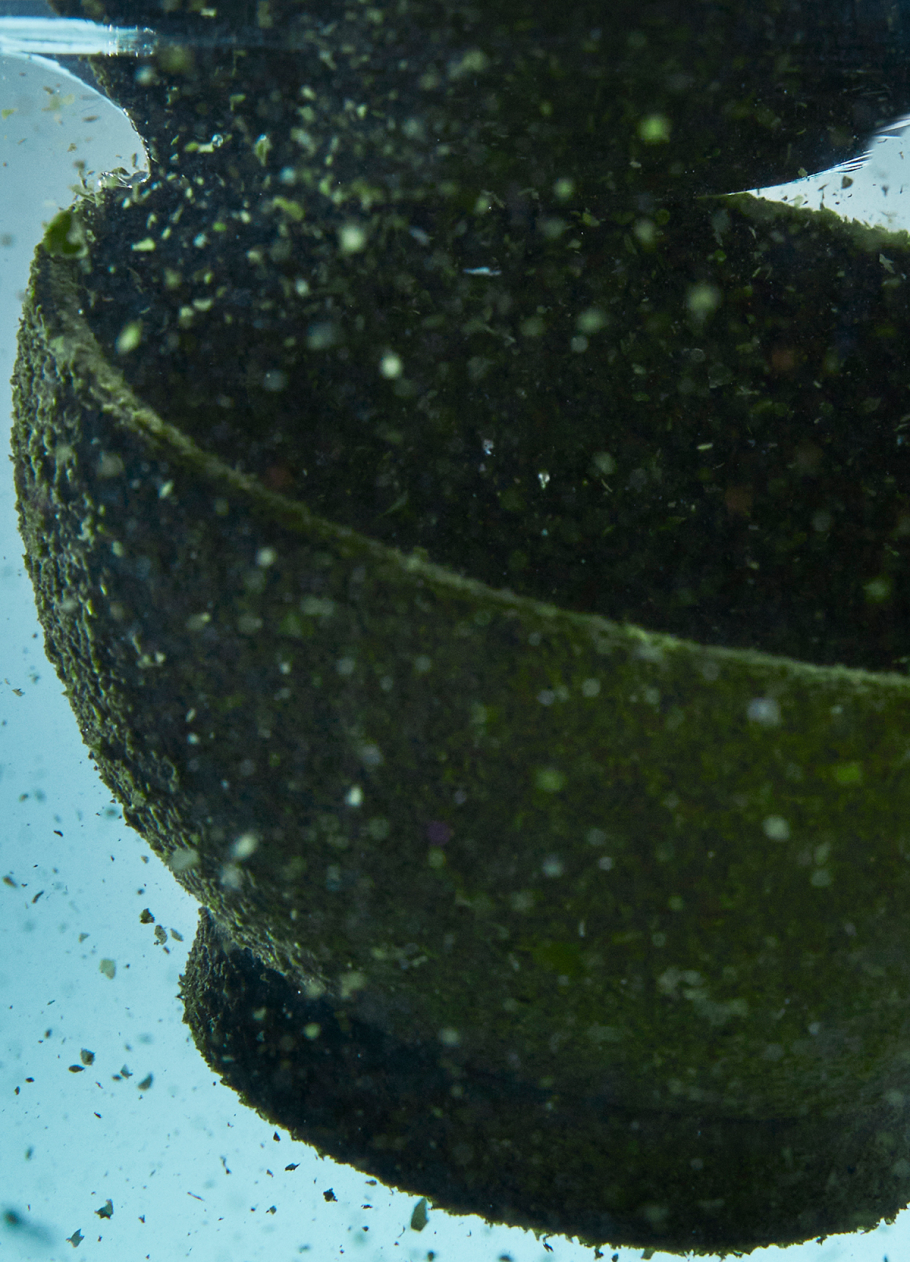
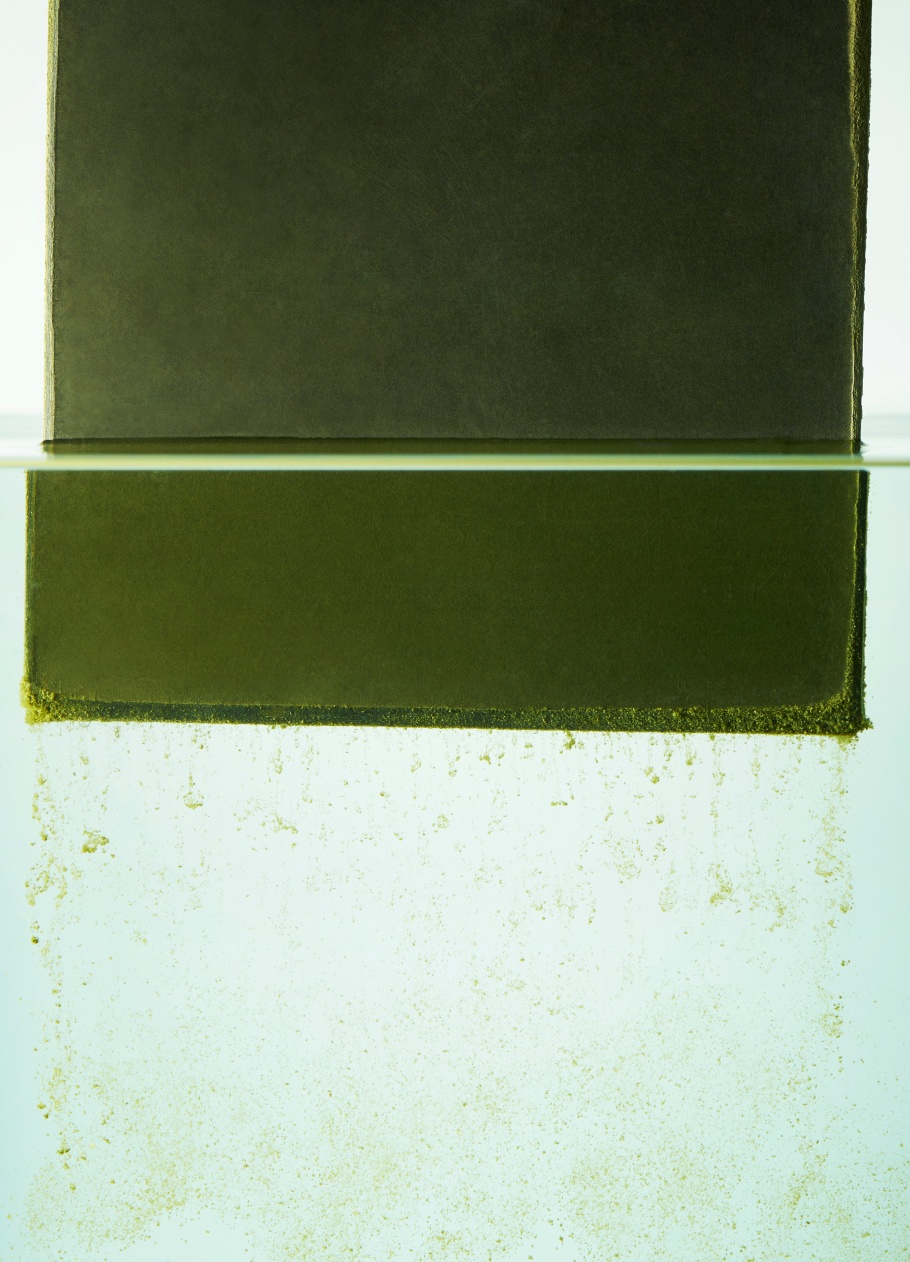
Materials taken from the sea thus return to the earth. In contact with soil moisture, the biodegradation cycle begins. There, the materials regain one of the ancestral uses of seaweed: acting as fertiliser and fostering biodiversity in an entirely natural way. The materials and objects can also be fed back into manufacturing processes to be reworked endlessly.
Foresight and design fiction
A constant dialogue between science, design and craftsmanship, this project prompts us to ask questions and to reflect on future modes of production and consumption. Can we, together, take positive action and lay the foundations of a society that must be sustainable? Can we imagine a waste-free world where everyday objects come from unused biomass?
In a context of climate emergency, seaweed brings hope. Wrongly regarded as a form of pollution, of which it is in fact only the symptom, seaweed offers us an infinite field of innovation and concrete solutions to meet the challenges of our time.
Through its research, its approach and its convictions, Studio Samuel Tomatis is convinced that new forms of industrialisation, modelled on living organisms and ecosystems, are possible. A reasoned industry, designed to respond to local challenges, where the scale of distribution is in harmony with the availability of the resource and the place where it is found. An industry modelled on the seasonality of biomass and paced by periods of fallow, growth, harvest and then production. A fully circular industry, where production scraps are fed back into the transformation process. A frugal industry, designing only biodegradable products.